It sounds simple. Every dog owner should want to buy the best pet treadmill for dogs. Until you see the 300-pound gym treadmill abandoned in the far corner of the garage. Free machine. Right there. Couldn't you just turn the dog loose on it? I wondered too, until I found out the answer is a little bit of safety, size and all-out canine psychology.
The Belt Gives You the First Clue
A human treadmill belt is designed for those two feet to pound out a predictable, straight pattern of pavement. Dogs have four paws, shorter legs and a totally different rhythm – as they move from a walk to a trot, then to a canter, depending on their speed. The belt has to accommodate all that.
Dog treadmill belts tend to be narrower, as your dog only needs a lane, not a freeway. They tend to sit lower to the ground, as well. That's a bigger deal than you might think. A tiny dog jumping onto a human deck looks like a toddler scaling a kitchen counter.
Surface-wise, human belts are smooth, so shoes can slide. Doggy belts usually have a bit of grip, as paw pads don't love to slide either. One skid and a dog's convinced the machine is a monster.
Match the Speed Range to the Dog's Pace
Here's something that catches people off guard. Human treadmills start at a walking speed that we find walking to be just fine, thank you. For a dog, even that can be a lot.
The tiny terrier trotting beside you on a leash is gonna be running faster, relative to his effort, than you are at the same effort. Their little legs spin faster with less distance covered. On a human treadmill, that starts to feel like a marathon, just to stay upright.
Dog treadmills can start much lower, and they increase in small enough steps. Some don't have a motor at all, so your dog sets her own pace. Others have motors that are specially calibrated to make a gentle start. That prevents nervous dogs from taking off at a run and never looking back.
"But my dog is big," somebody always says. Fair. And large breeds can tolerate the range on human treadmills more easily. But still, a large dog needs a longer belt than you might think, and most gym models are designed for tall people taking tall strides.
Safety Features: Where the Gap Gets Girthy
This is the section I'd probably want to read twice. Human treadmills are designed assuming a person will stand upright, with the ability to grab the handrails and to reach a stop button. Dogs, not so much.
Dog-specific models will have side barriers that can't be pushed down or pushed off the sides, so your dog's legs don't dangle over the edges. Paws and gaps are a dangerous combination. They also have a front barrier or a place to attach a leash, so your dog stays in the center of the belt. Some even have a low-entry ramp. Others are equipped with a wrist-attach stop clip.
A plain old treadmill is lacking in all of those. Open sides, a high step, a control panel at dog height, in other words a tempting place to step on the controls. I've seen a labrador hit the speed button with a nose, shoot the belt up to three speeds higher than desired, and send the dog flying off the back like it was a rocket launch. No one was hurt, but the dog was so ashamed it crawled into the bathroom and hid behind the toilet for an hour.
If you want to go the treadmill-for-humans route, you can add barriers and a leash hook. As long as you are handy, it's doable. It also takes effort, and it's never quite as safe.
Motors, Noise and Nervous Dogs
Dogs hear much better than we do, and a motor that sounds merely loud to us can sound like a jet engine to a dog. Many human treadmills have strong motors designed to get joggers up into double digit speeds. They vibrate, they rattle, and that makes sensitive pups nervous.
Dog-specific models often have smaller, quieter motors that aren't designed to get into double digit speeds, either. That means they are quieter for nervous pups.
Manual treadmills are the quietest of all, as they have no motor to whine. Just the soft hum of the belt as the dog walks it. Great for nervous rescues.
Pro tip: run the empty treadmill while your dog watches from across the room. Let them judge the machine. Dogs and people both hate surprises.
Size, Weight and Placement
A full-size gym treadmill is a behemoth. It's long, heavy, and expensive to move. Dog treadmills are smaller, lighter, and many can be slid underneath a bed or rolled into a closet.
The portability is important if you live in an apartment. A large gym treadmill can take up half your living room. A small dog treadmill frees up the space.
Weight capacity is less of a concern with human treadmill, as they are rated for hundreds of pounds. Dogs, on the other hand, are listed by breed size and weight so check carefully before you buy.
Cost: Cheap is Never Cheap
Money is the reason most people consider the treadmill-for-humans option. You can buy a used treadmill cheap, or even free. Who can turn down a freebie?
But there's a hidden cost. Accessories! Add a leash hook, add side barriers, add a non-slip belt cover and a dog ramp and suddenly a free treadmill isn't free anymore. It costs money, and it costs time.
Dog treadmills are priced from budget to bucket list. The budget-priced models are perfectly serviceable for small and medium-sized dogs. You pay for the safety features built in.
Training: One Dog, Two Machines
The training procedures remain the same no matter which type of treadmill you buy. Go slow. Let your dog explore the machine off-leash, while reinforcing with treats and praise. Then turn on to the slowest speed, stay close to your dog and watch for signs of distress. Practice just a few minutes at a time, building up gradually.
A dog who has learned to love the treadmill will hop on the machine at the first sign of a walk. A dog who was unwilling will remember the experience forever, and it's not a positive one.
Don't forget, never leave a dog on a treadmill unattended. Not for the mailman, not for dinner, not for the bathroom break.
Match the Machine To The Dog
Here's an easy way to think about what you need: Small, nervous and older dogs are more suitable for manual or dog-specific models. They benefit from a short, side-railed belt, a slow starting speed and a quiet motor. Smaller, athletic dogs are more adaptable to a long belt and a stronger motor – either dog-specific or a tailored gym treadmill.
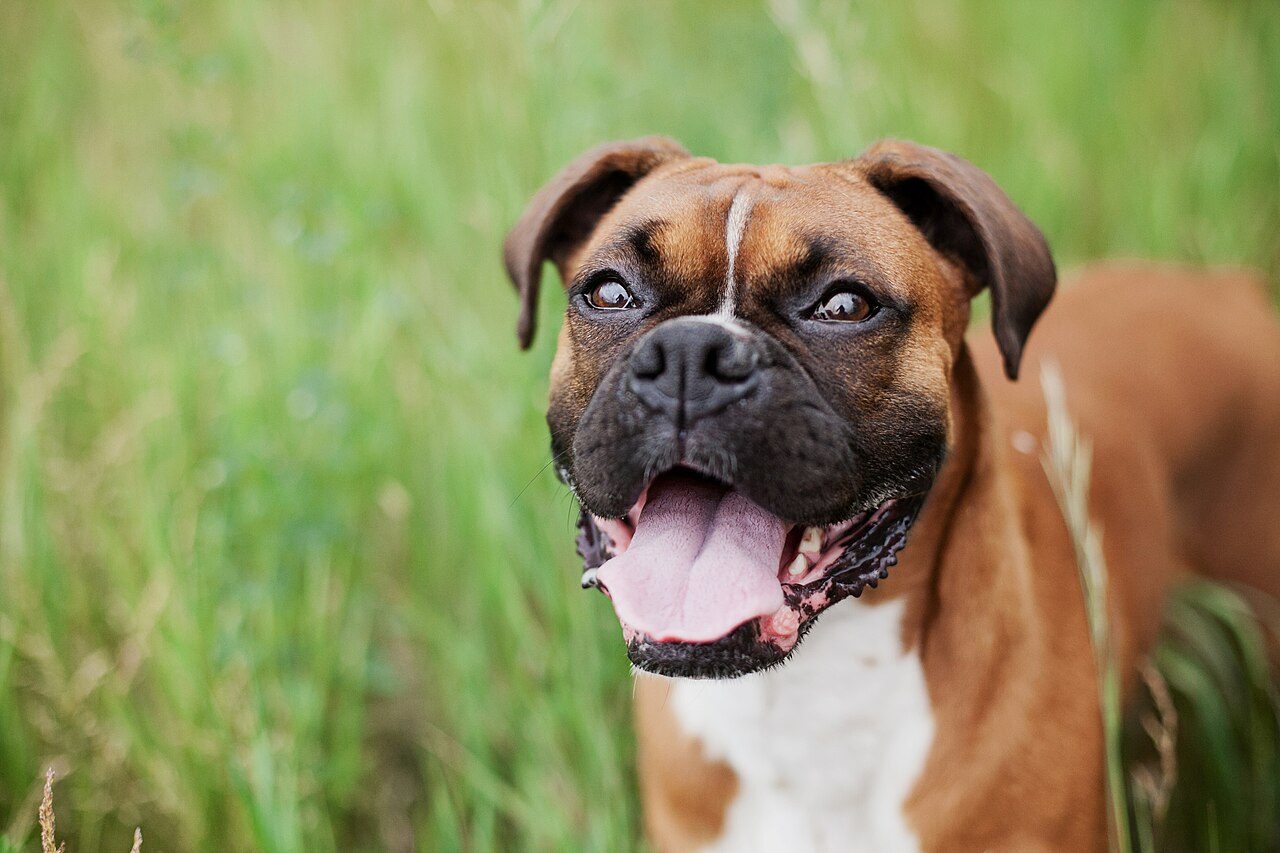
Flat-nosed breeds are more prone to rapid heat buildup and difficult breathing, so shorter treadmill times are necessary. Remember, as always, to consult your veterinarian about joint-impacted dogs.
Look around your house. If you have a small spare bedroom or an empty garage, you have room for a full-size treadmill. If you live in an apartment, you may prefer a smaller treadmill. Consider your own patience level. An non-motorized treadmill takes more initial effort, while a motorized treadmill will cost more.